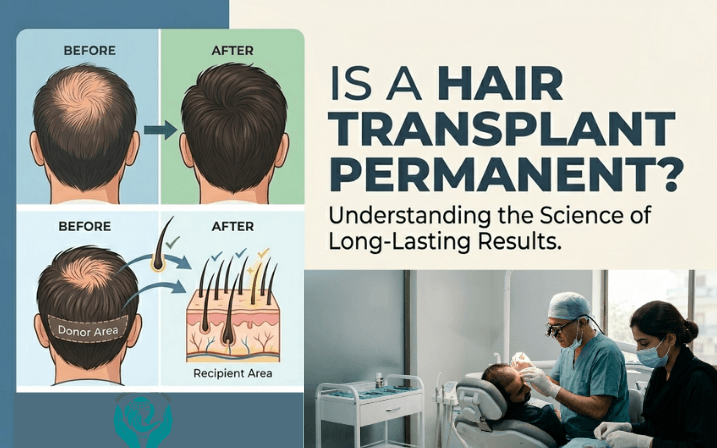
Are you considering a hair transplant and wondering about one key question: is hair transplant permanent, or will the hair fall out again after a few years? You have probably heard mixed opinions; some say it lasts forever, others claim it does not. So what is the reality?
The short answer is yes, a hair transplant is a permanent solution for hair loss, but only if you understand what ‘permanent’ really means and ensure the procedure is done correctly. In this guide, you’ll learn everything you need to know before making your decision.
What Does Permanent Actually Mean in Hair Transplant?
In hair transplantation, “permanent” refers to the long-term survival and continuous growth of transplanted hair, not a guarantee against all future hair changes.
According to the Journal of Cutaneous and Aesthetic Surgery, hair transplant procedures can achieve a graft survival rate of over 90% when performed by skilled surgeons using proper techniques, making them a reliable long-term solution for hair loss.
The permanence is based on the donor area principle. Hair follicles are taken from the back and sides of the scalp, where they are genetically resistant to DHT (dihydrotestosterone), the hormone responsible for pattern baldness.
Once transplanted, these DHT-resistant follicles retain their genetic characteristics, allowing them to continue growing in the new area for a lifetime, even as surrounding native hair may continue to thin.
Is Hair Transplant Permanent or Temporary?
A hair transplant is permanent in the sense that the moved follicles will not fall due to genetic hair loss. However, it is not a complete cure for hair loss because the rest of your hair may still be affected by aging, hormones, stress, or genetics.
The transplanted area is protected. But if you have progressive hair loss, the areas around it may continue to thin. This is why:
-
Some patients need more than one session over the years.
-
Medications like Finasteride are often recommended alongside the transplant to protect native hair
-
A skilled surgeon will design your hairline, keeping future hair loss in mind
How Long Does a Hair Transplant Last?
The truth is, how long your hair transplant lasts depends entirely on you. The clinic, the technique, the aftercare, and your long-term plan all play a role. Here is what the journey actually looks like:
Months 1–6: Shedding & Early Growth.
Transplanted hairs shed within the first few weeks; this is completely normal. The follicle stays alive under the skin and slowly re-establishes its blood supply. By month three, thin new hairs begin emerging. Growth is slow and may appear patchy at first, but this is all part of the process.
Months 6–12: Visible Results.
This is where things get exciting. Thickness and coverage improve significantly, and by month twelve, your transplanted hair reaches its natural texture and density, behaving exactly like your normal hair from this point forward.
Years 5, 10, 20+: Long-Term Outlook
This is where a hair transplant truly proves its worth. The transplanted follicles, being DHT-resistant, are not programmed to follow the same hair loss pattern that caused your original baldness. Properly transplanted follicles continue producing hair for the rest of a patient's life in the vast majority of cases.
That said, what changes over the years is not the transplanted hair itself, but the native hair around it. As you age, the surrounding non-transplanted hair may gradually thin, which can affect the overall appearance of density. This is exactly why surgeons at clinics like Dr. Hijrat Clinic plan your hairline and graft placement with your future hair loss progression in mind, not just how you look today. In some cases, a second session or a medication like Finasteride may be recommended to preserve the overall look in the long term.
4 Reasons Your Hair Transplant May Not Last as Long as Expected
Not every transplant delivers lifelong results. Here is when things can go wrong:
1. An Untrained or Unqualified Surgeon
The most common reason for transplant failure is poor technique. If the grafts are harvested incorrectly, they may not survive. Always verify your surgeon's credentials and ask to see before-and-after photos of real patients.
2. The Wrong Candidate
Hair transplants work best for people with stable, permanent hair loss, typically androgenetic alopecia (pattern baldness). If your hair loss is still in an active, aggressive phase, transplanting at that point may give poor results as surrounding hair continues to fall.
3. Aftercare Was Ignored
The first 10–14 days after surgery are critical. Exposing the scalp to direct sunlight, applying heavy oils too early, scratching, or engaging in intense physical activity can damage newly implanted grafts. Following your surgeon's aftercare instructions is not optional; it directly impacts how long your results last.
4. Not Using Medication to Protect Native Hair
This is the most overlooked factor. A hair transplant restores the transplanted area, but it cannot stop ongoing native hair loss. Dermatologists strongly recommend Finasteride (oral) or Minoxidil (topical) after a transplant to maintain the surrounding hair and prevent the transplanted area from looking isolated over time.
Hair Transplant in Islamabad: What Pakistani Patients Should Know
If you are considering a hair transplant in Islamabad, here are some practical, local tips that most clinics will not tell you:
Avoid these common mistakes in the first 2 weeks:
These small habits can make a big difference in avoiding common hair transplant mistakes that silently affect your results.
-
Do not apply coconut oil, mustard oil, or any home remedy to the scalp
-
Avoid namkeen, heavily spiced food, and biryani, as high salt causes inflammation and can worsen swelling
-
Do not go outside in Islamabad's harsh afternoon sun without covering your head gently
-
Skip the gym, heavy lifting, and any activity that raises blood pressure
What to Look for in a Hair Transplant Clinic
-
A board-certified and verified surgeon who is present throughout the procedure
-
Transparent pricing with a proper consultation and personalized treatment plan
-
Dedicated post-operative follow-up care to monitor your recovery
-
Real patient results from the clinic's own cases that you can review before deciding
At Dr. Hijrat Clinic in Islamabad, every hair transplant procedure is performed by Dr. Hijrat himself, a board-certified plastic and cosmetic surgeon, using the modern FUE technique with a personalized hairline design for each patient.
Do You Need More Than One Hair Transplant Session?
Not always, but sometimes, yes.
If your hair loss is extensive, or if you have it done at a young age when hair loss is still progressing, you may need a second session in the future. A good surgeon will always plan your first transplant with your future hair loss in mind, designing a hairline that will still look natural even if more hair is lost over time.
This is why age matters. Someone in their 20s with aggressive hair loss may need a more conservative approach and possibly a second session later. Someone in their 40s with stable hair loss often achieves a final, complete result in one session.
Expert Opinion: Dr. Hijrat Clinic, Islamabad
Dr. Hijrat Ullah, Plastic & Cosmetic Surgeon at Dr. Hijrat Clinic, shares:
"A hair transplant is one of the most permanent cosmetic procedures available today. The transplanted follicles are genetically programmed to resist hair loss; they will grow for life. But patients need to understand that the rest of their hair may still be vulnerable. We always create a long-term plan for each patient, the right technique, the right hairline design, and the right aftercare so they are happy not just in year one, but in year ten and beyond."
A Patient's Story
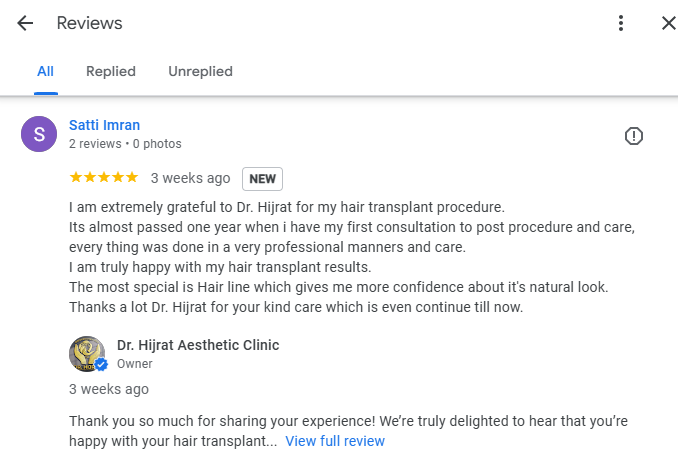
Satti Imran has been a patient at Dr. Hijrat Clinic for almost a year now. From his very first consultation to his recovery, everything was handled with care and professionalism. His hairline looked completely natural, and that one result gave him a confidence he had not felt in years.
Conclusion:
A hair transplant is a permanent solution for hair fall, but "permanent" means something specific. The transplanted follicles, taken from your DHT-resistant donor area, are designed to last a lifetime. They will not fall out the way your original hair did. What matters is choosing the right surgeon, being the right candidate, following aftercare properly, and protecting your native hair with medication over time.
Done right, a hair transplant does not just restore your hair, it restores your confidence for years to come.
If you are considering a hair transplant in Islamabad and want an honest assessment of whether it is right for you, book a free consultation at Dr. Hijrat Clinic and get a plan built around your specific situation
Frequently Asked Questions
1. Is a hair transplant permanent or temporary?
A hair transplant is considered permanent. The transplanted hair follicles are DHT-resistant, meaning they will not fall due to genetic hair loss. However, your existing native hair around the transplant may continue to thin, so a long-term care plan is important.
2. How long does a hair transplant last?
The transplanted hair follicles are expected to last a lifetime. Most patients see full results by 12–18 months and enjoy natural, lasting hair growth for decades. The exact longevity depends on the surgeon's skill, your aftercare, and whether you protect your native hair with medication.
3. How long do hair transplants last after 10 years?
Studies show that well-performed hair transplants maintain excellent results even after 10 years. Since the transplanted follicles are genetically resistant to DHT, they continue to grow normally. Some patients may need a second session if the surrounding native hair has thinned significantly.
4. Is a hair transplant in Islamabad a permanent solution?
Yes, a hair transplant performed by a qualified, board-certified surgeon in Islamabad using modern FUE techniques is a permanent solution. The key is choosing a credible clinic with a verified surgeon, proper consultation, and post-operative care. Dr. Hijrat Clinic in Islamabad offers all of this with a proven track record.
5. Do I need medication after a hair transplant?
Most dermatologists recommend continuing with Finasteride and/or Minoxidil after a hair transplant. These medications help protect your natural hair from further loss, ensuring the overall result remains natural and full over the long term. Your surgeon will guide you on the right plan for your specific situation.